

Purple Tree Peony
Paeonia suffruticosa 'Shimadaijin'

Height: 5 feet
Spread: 5 feet
Sunlight:

Hardiness Zone: 4b
Other Names: Shima Daijin Tree Peony
Brand: RADTKE
Description:
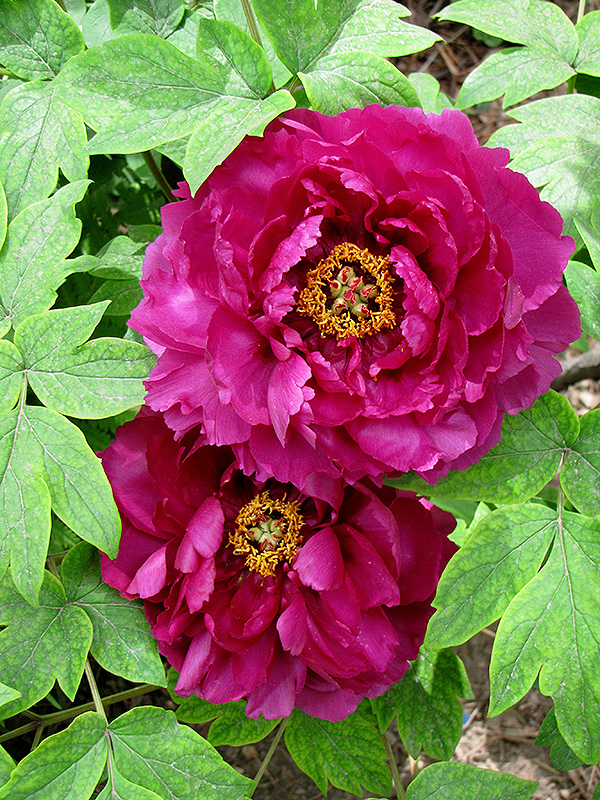
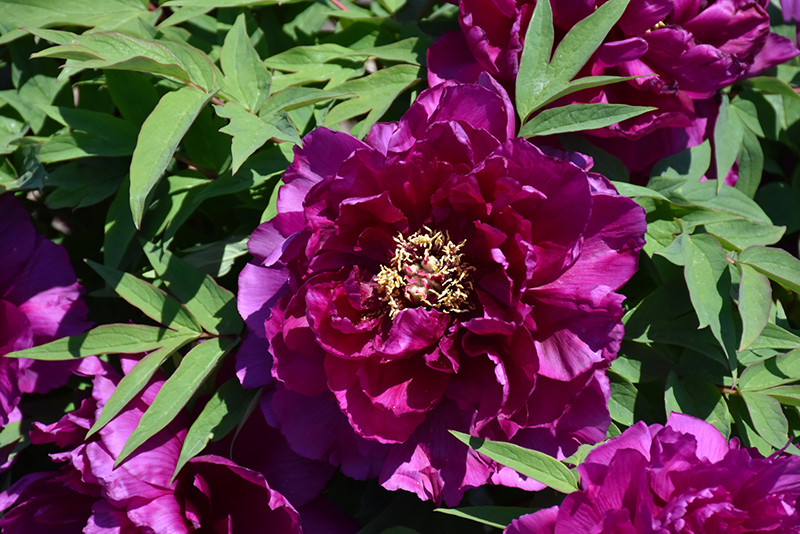
An outstanding woody peony for the garden, presenting attractive purple-pink blooms with yellow stamens; great as an accent in the garden or massed in borders; unlike perennial peonies, remember not to prune this variety
Ornamental Features
Purple Tree Peony features bold lightly-scented semi-double violet cup-shaped flowers with pink overtones and yellow eyes at the ends of the branches from mid to late spring. The flowers are excellent for cutting. It has attractive light green deciduous foliage. The narrow compound leaves are highly ornamental but do not develop any appreciable fall color.
Landscape Attributes
Purple Tree Peony is a multi-stemmed deciduous shrub with an upright spreading habit of growth. Its relatively fine texture sets it apart from other landscape plants with less refined foliage.
This shrub will require occasional maintenance and upkeep, and should not require much pruning, except when necessary, such as to remove dieback. It is a good choice for attracting bees and butterflies to your yard, but is not particularly attractive to deer who tend to leave it alone in favor of tastier treats. It has no significant negative characteristics.
Purple Tree Peony is recommended for the following landscape applications;
- Accent
- Mass Planting
- General Garden Use
Planting & Growing
Purple Tree Peony will grow to be about 5 feet tall at maturity, with a spread of 5 feet. It has a low canopy, and is suitable for planting under power lines. It grows at a slow rate, and under ideal conditions can be expected to live for 50 years or more.
This shrub should be grown in a location with partial shade or which is shaded from the hot afternoon sun. It does best in average to evenly moist conditions, but will not tolerate standing water. It is not particular as to soil pH, but grows best in rich soils. It is quite intolerant of urban pollution, therefore inner city or urban streetside plantings are best avoided. Consider applying a thick mulch around the root zone in winter to protect it in exposed locations or colder microclimates. This is a selected variety of a species not originally from North America.